
Here is some of the material that is covered in Mrs. Yoder's senior English Class.
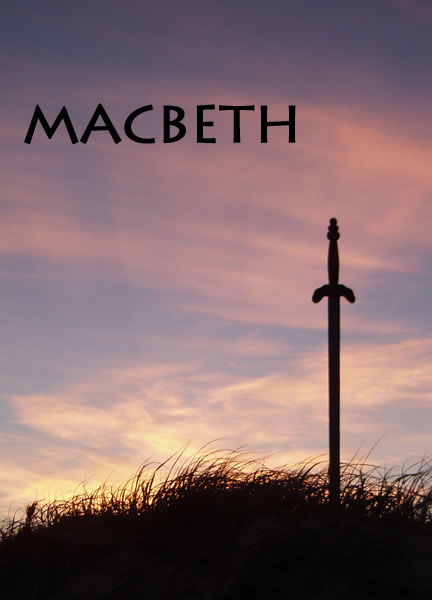 |
This drama is one of the great tragedy themed plays by William Shakespeare. The themes illustrated in the play include ambition, fate, deception and treachery. Three witches decide to confront the great Scottish general Macbeth on his victorious return from a war between Scotland and Norway. The Scottish king, Duncan, decides that he will confer the title of the traitorous Cawdor on the heroic Macbeth. Macbeth, and another General called Banquo, happen upon the three witches. The witches predict that he will one day become king. He decides that he will murder Duncan. Macbeth's wife agrees to his plan. He then murders Duncan assisted by his wife who smears the blood of Duncan on the daggers of the sleeping guards. A nobleman called Macduff discovers the body. Macbeth kills the guards insisting that their daggers smeared with Duncan's blood are proof that they committed the murder. The crown passes to Macbeth. More murders ensue and the bloodied ghost of Banquo appears to Macbeth. Lady Macbeth's conscience now begins to torture her and she imagines that she can see her hands covered with blood. She commits suicide. Macduff kills Macbeth and becomes king. |
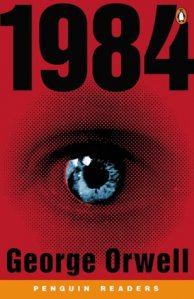 |
In 1984, Winston Smith lives in London which is part of the country Oceania. The world is divided into three countries that include the entire globe: Oceania, Eurasia, and Eastasia. Oceania, and both of the others, is a totalitarian society led by Big Brother, which censors everyone’s behavior, even their thoughts. Winston is disgusted with his oppressed life and secretly longs to join the fabled Brotherhood, a supposed group of underground rebels intent on overthrowing the government. Winston meets Julia and they secretly fall in love and have an affair, something which is considered a crime. One day, while walking home, Winston encounters O’Brian, an inner party member, who gives Winston his address. Winston had exchanged glances with O’Brian before and had dreams about him giving him the impression that O’Brian was a member of the Brotherhood. Since Julia hated the party as much as Winston did, they went to O’Brian’s house together where they were introduced into the Brotherhood. O’Brian is actually a faithful member of the Inner-Party and this is actually a trap for Winston, a trap that O’Brian has been cleverly setting for seven years. Winston and Julia are sent to the Ministry of Love which is a sort of rehabilitation center for criminals accused of thoughtcrime. There, Winston was separated from Julia, and tortured until his beliefs coincided with those of the Party. Winston denounces everything he believed him, even his love for Julia, and was released back into the public where he wastes his days at the Chestnut Tree drinking gin. |
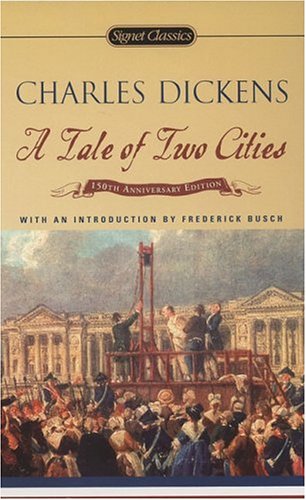 |
A Tale of Two Cities, by Charles Dickens, deals with the major themes of duality, revolution, and resurrection. It was the best of times, it was the worst of times in London and Paris, as economic and political unrest lead to the American and French Revolutions. The main characters in Dickens' A Tale of Two Cities — Doctor Manette, Charles Darnay, and Sydney Carton — are all recalled to life, or resurrected, in different ways as turmoil erupts. |
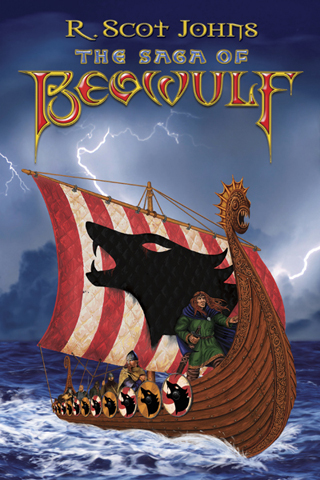 |
Short Summary of Beowulf: This epic poem describes the hero Beowulf marching with his fourteen warriors and arrive at the place of Heorot where he finds that he king of Heorot Hrothgar terrified by a monster called Grendel. Beowulf manages to kill Grendel and his monster-mother at his abode beneath a lake. After that he returns to his country and becomes the king there and rules his kingdom for fifty years. He dies of the wounds he got once during the combat fought with a dragon. |
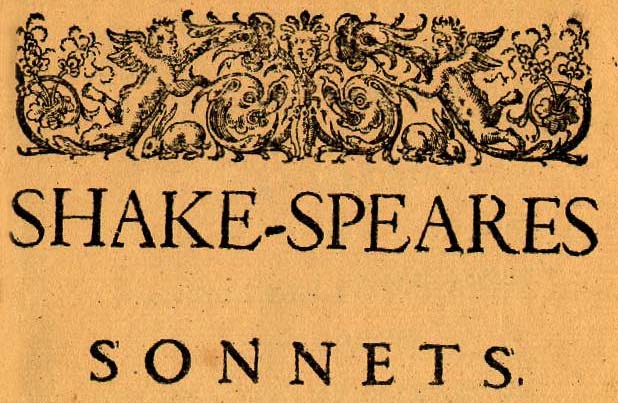 |
Sonnet 2 by William Shakespeare When forty winters shall besiege thy brow Sonnet 18 by William Shakespeare Shall I compare thee to a summer's day? Sonnet 29 by William Shakespeare When in disgrace with fortune Sonnet 55 by William Shakespeare Not marble nor the gilded monuments Sonnet 109 by William Shakespeare O never say that I was false of heart Sonnet 116 by William Shakespeare Let me not to the marriage of true minds Sonnet 126 by William Shakespeare O thou my lovely boy Sonnet 130 by William Shakespeare My Mistress eyes Sonnet 133 by William Shakespeare Beshrew that heart Sonnet 137 by William Shakespeare Thou blind fool love |